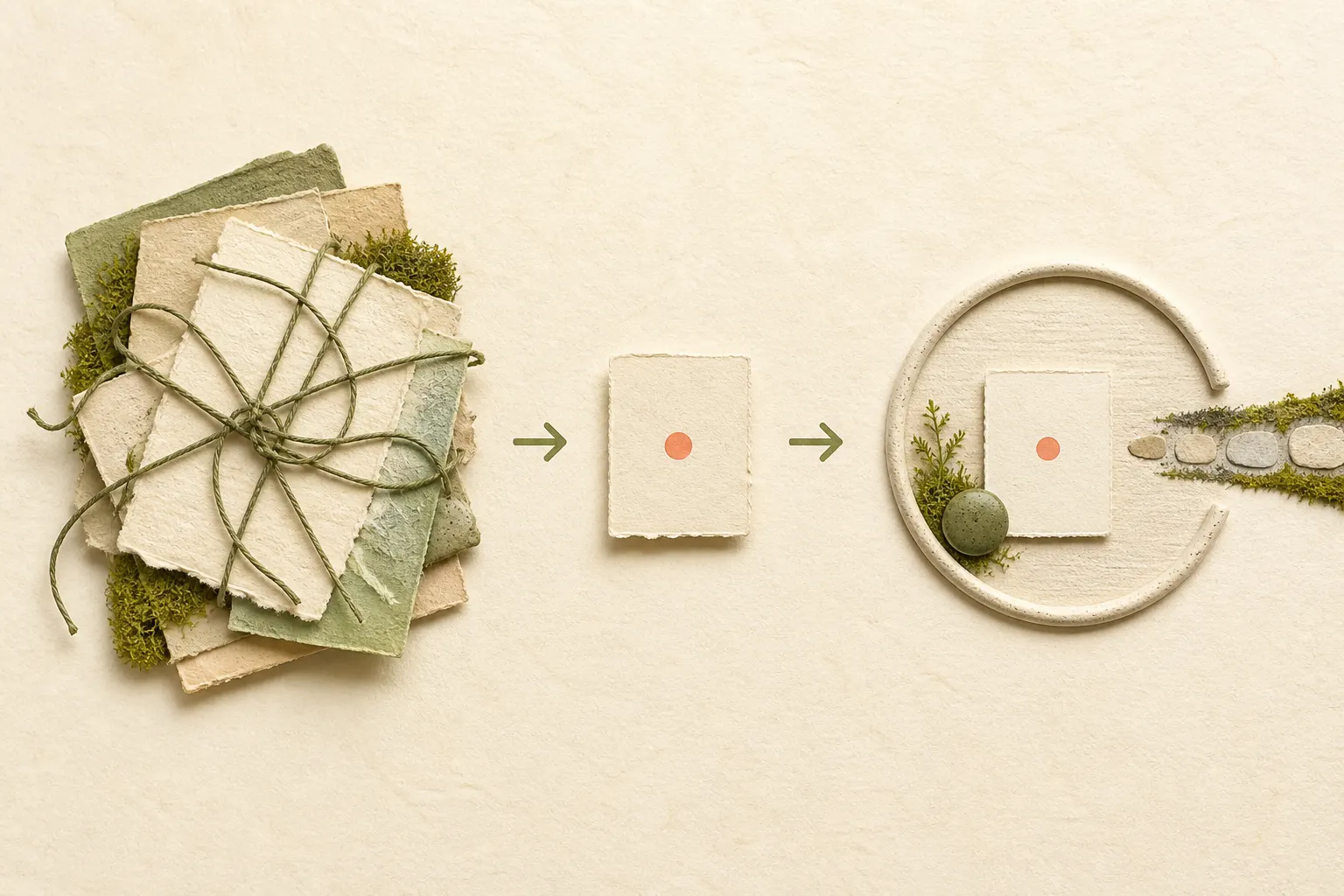
You can care about a task, understand why it matters, and still feel unable to cross the starting line. That does not make you lazy. The entrance may be hiding too many decisions, an unclear instruction, missing information, fatigue, anxiety, or a task that is simply too large.
Find the hidden start
“Prepare the presentation” is not one action. It may hide research, decisions, writing, design, and rehearsal. Rewrite the entrance as something you could watch a person do: open the notes, paste the client questions, or title the first slide.
If the first move still feels vague, look for the first object, place, or person involved. Specific beats ambitious at the starting line.
Remove one decision
When several tasks compete, do not build a perfect ranking system. Choose by consequence and timing: what becomes harder if it waits, and what actually has a deadline?
For a single vague task, pre-decide the file, tool, or location. Motivation may appear after movement; it does not have to pay the entrance fee.
Make the action physically obvious
A useful first move can take two minutes and still count: put the document on screen, write the email subject, or place the shoes by the door.
This is not a trick for forcing yourself to finish. It replaces an abstract demand with a concrete action and gives you new information about what is blocking the next step.
Borrow a small window of time
Choose an interval that feels enterable rather than impressive. Ten minutes may be enough to test the first move.
When it ends, decide again: continue, leave a return note, ask for help, or change the task. The timer reports time; it does not grade effort.
If the task is still stuck, diagnose the blocker
Check whether the work is safe, possible, yours, and clear. A missing decision, resource, permission, or realistic deadline cannot be solved by making the timer louder.
Ask for a smaller deliverable or a real return point. Persistent or distressing impairment deserves individualized support; a productivity workflow cannot diagnose the cause.
Health note: This is educational guidance, not ADHD diagnosis or treatment. Persistent or distressing difficulty deserves individualized support.
Research behind this guide
This research explains the ADHD-related challenges discussed here. It does not prove that MossyMind changes ADHD symptoms.
- CDC — ADHD in Adults
Current overview of adult ADHD and common difficulties with attention, lengthy tasks, and organization.
- NICE guideline NG87 — ADHD diagnosis and management
Clinical guidance that includes individualized environmental modifications and non-pharmacological support.
- Alderson et al. — Adult ADHD and working memory meta-analysis
Meta-analysis of 38 studies comparing working-memory performance in adults with and without ADHD.