
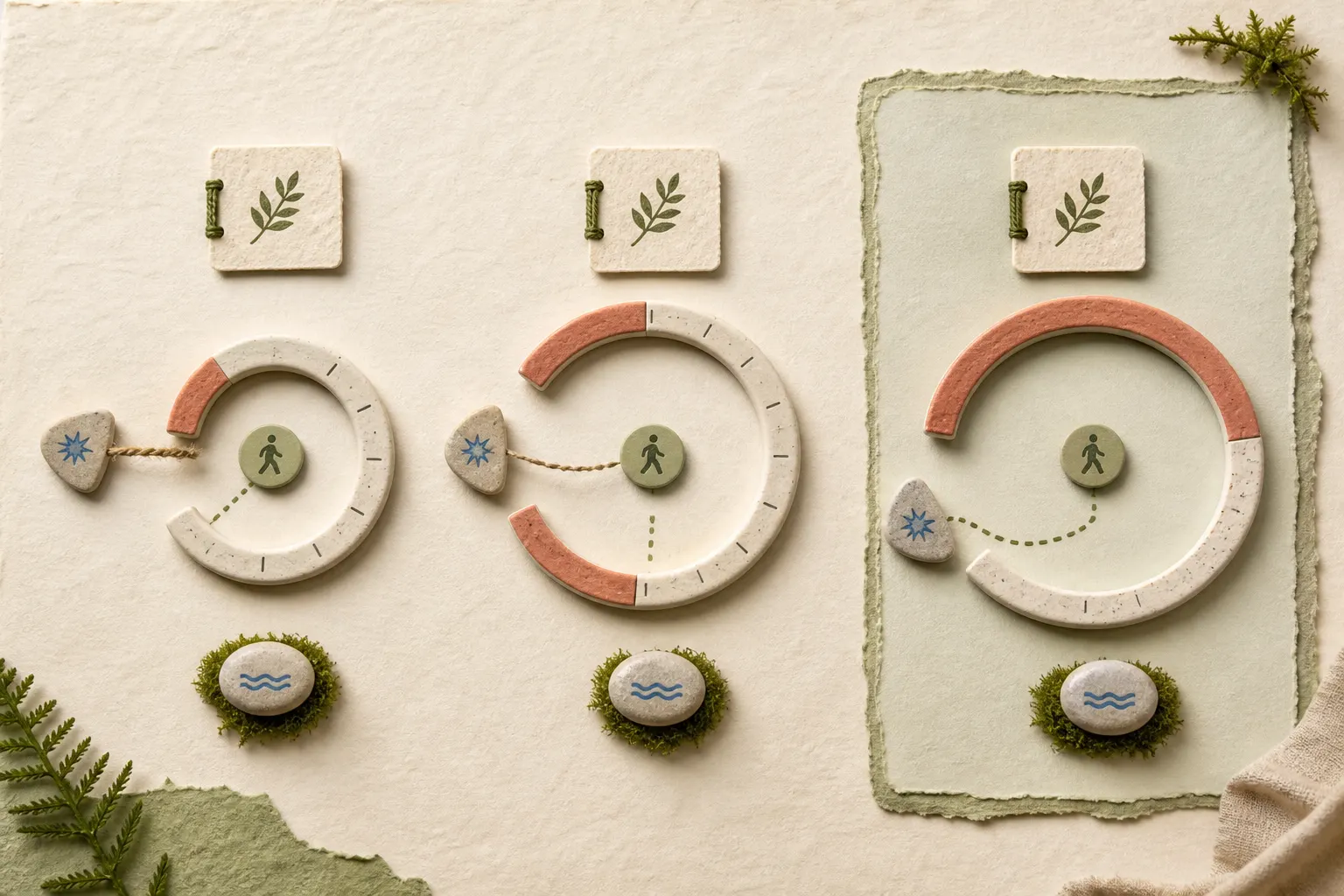
The classic Pomodoro technique alternates 25 minutes of work with a five-minute break. Some people appreciate the clear boundary. Others find that the interval is hard to enter, interrupts useful momentum, or becomes another rule to fail. The sensible approach is to test a timer against the task and your actual response.
What research supports
ADHD is associated with measurable differences in time perception across studies. NICE also lists shorter periods of focus with movement breaks as one possible environmental modification. Neither source proves that Pomodoro treats ADHD or that 25/5 is the correct schedule.
Choose the interval from the task
Use a short interval when entry is the main barrier or the next action is uncertain. Use a longer interval for work with expensive setup or when interruption would destroy context. Define what “enough for this interval” means before starting.
Handle interruptions on purpose
Keep one capture place beside the task. When an unrelated thought arrives, write it down without switching surfaces. When a necessary interruption happens, pause and leave a return note that names the next visible move.
Make breaks serve a real need
A break can support movement, water, food, medication routines, visual rest, or a change of environment. It can also be skipped or delayed when continuing is the safer and more useful choice. Avoid turning a break into an unbounded feed.
Try alternatives when countdowns add pressure
Use a stopwatch, a visible clock, a music track, a body-doubling appointment, or a simple “work until this small artifact exists” boundary. The mechanism matters more than loyalty to a branded method.
Health note: This is educational guidance, not ADHD diagnosis or treatment. Persistent or distressing difficulty deserves individualized support.
Research behind this guide
This research explains the ADHD-related challenges discussed here. It does not prove that MossyMind changes ADHD symptoms.
- NICE guideline NG87 — ADHD diagnosis and management
Clinical guidance that includes individualized environmental modifications and non-pharmacological support.
- Metcalfe et al. — ADHD time-perception meta-analysis
Systematic review and meta-analysis of time-perception differences across the lifespan.
- CDC — ADHD in Adults
Current overview of adult ADHD and common difficulties with attention, lengthy tasks, and organization.