What is on the page
Other rooms’ things wait in the basket
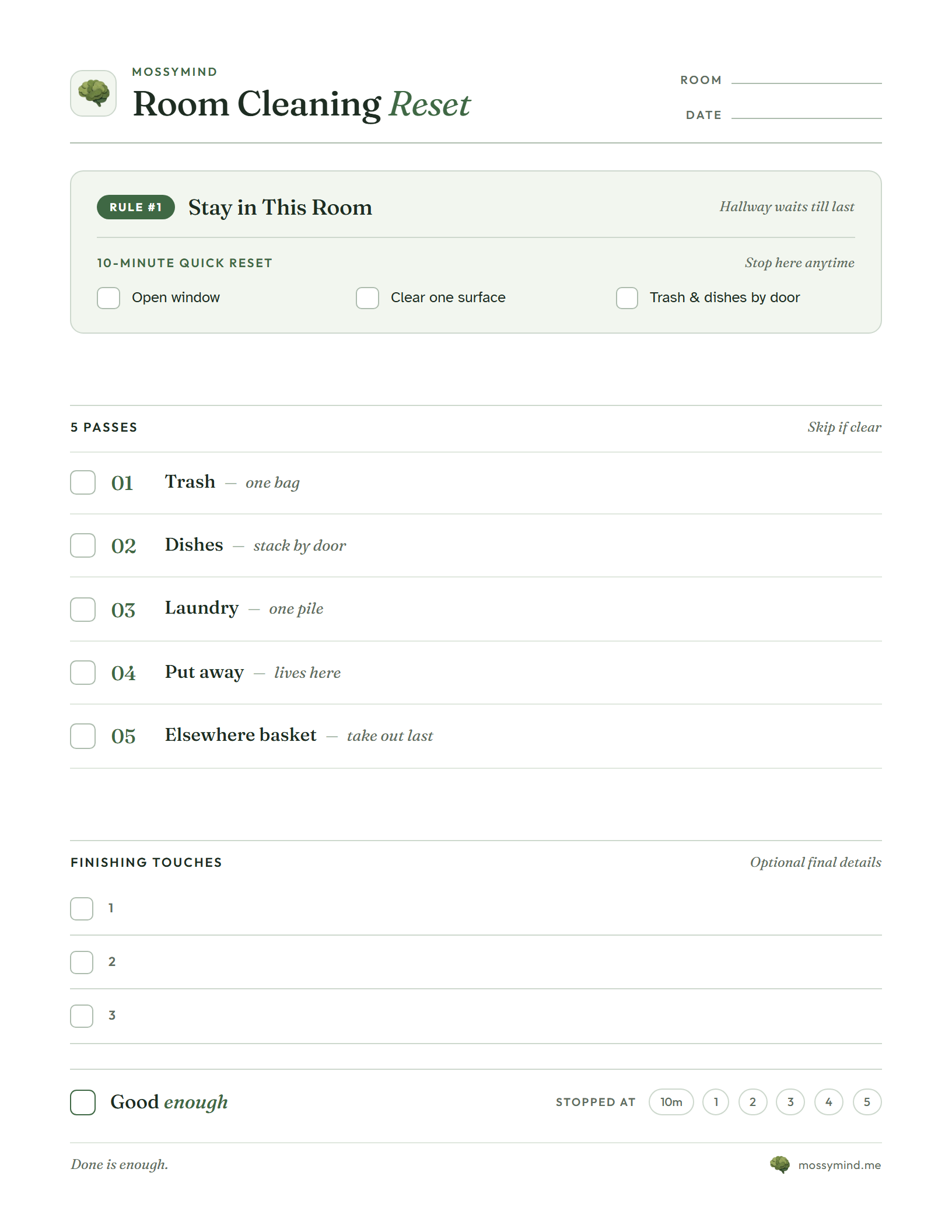
Rule #1 (Stay in This Room) + an Elsewhere Basket stops side-quest wandering.
A 10-minute reset you can stop after
10-Minute Quick Reset box gives low-energy days a fast, honest win.
Five passes, one kind of thing each
Five single-category steps eliminate “what do I pick up next?” decision fatigue.
Cleaning with ADHD rarely stalls from not caring; it stalls when carrying one coffee mug to the kitchen turns into reorganizing the spice rack while the bedroom stays half-torn-apart. This free one-page ADHD cleaning checklist puts Rule #1 at the top—Stay in This Room—opens with a 10-Minute Quick Reset you can stop after anytime, and sequences tidying into five single-category passes (Trash, Dishes, Laundry, Put Away, and an Elsewhere Basket taken out last).
Tessa’s Saturday reset
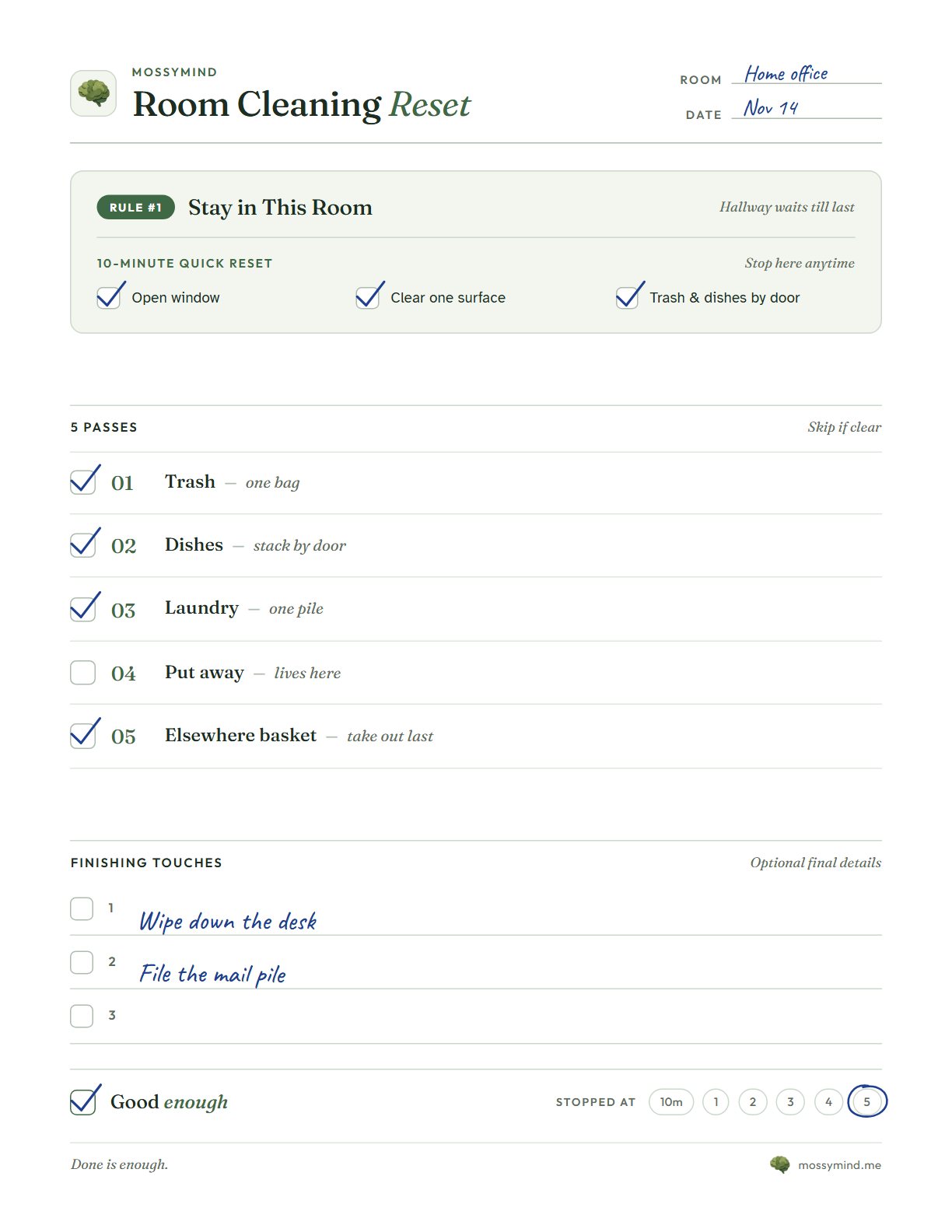
Resetting a buried home office in twelve minutes
- Before
- Tessa avoids her desk because papers, mugs, sweaters, and mail have merged into one visual pile.
- On the sheet
- She sets a 10-minute timer, cracks the window, bags wrappers in Pass 01, stacks three mugs by the door in Pass 02 without walking to the kitchen, tosses sweaters in one pile, and drops hallway items into a tote. The desk is clear before she ever leaves the room.
Why leaving the room mid-clean breaks working memory
Every doorway is a context switch filled with new visual cues—dishes in the sink, a package on the counter, a laundry buzzer. Our guides on ADHD out-of-sight, out-of-mind and task switching explain why parking outbound items by the closed door keeps your brain anchored to one finishable square of space.
Working in single-category passes (only trash, then only dishes, then only laundry) means you hold one rule in mind per lap instead of making fifty micro-decisions.
Permission to stop at 10 minutes or Pass 03
Deep cleaning—wiping baseboards or organizing drawers—is deliberately pushed down into Optional Finishing Touches at the bottom. Most rooms feel 80% calmer the moment trash, dishes, and laundry are gathered.
At the bottom right, circle where you stopped (10m, Pass 1–5) and tick Good Enough. For repeating household chores across the month, pair this cleaning checklist with the adult chore chart and recurring schedule or break a bigger declutter project down on the task breakdown worksheet.
Clean one room without getting sidetracked
- Bring one trash bag and one empty basket or tote into the room, then stay inside.
- If energy is low, do only the 10-Minute Quick Reset box and stop.
- Otherwise run Passes 01–04 in order: Trash, Dishes by door, Laundry pile, Put away.
- Drop anything that belongs in another room into Pass 05 · Elsewhere basket.
- Tick Good Enough and carry the dishes and basket out last.
Questions people ask
Which rooms does this ADHD cleaning checklist work for?
Any single room—bedroom, living room, home office, kids’ room, entryway, or kitchen—because the five passes target universal surface clutter before optional wiping or vacuuming.
What if the Elsewhere Basket stays full when I finish the room?
Walk the basket around the house for five minutes putting away only the obvious items, or park the basket in one spot with a sticky note for tomorrow. Either way, the room you cleaned stays usable tonight.
Why put trash and dishes before wiping surfaces?
Trying to wipe or vacuum around piles forces you to shuffle clutter from chair to bed and back. Clearing trash, dishes, and laundry first exposes the surfaces naturally.
Research behind this page
This research explains the challenges discussed here. It does not prove that MossyMind changes ADHD symptoms or any health outcome.
- CDC — ADHD in Adults
Current overview of adult ADHD and common difficulties with attention, lengthy tasks, and organization.
- Alderson et al. — Adult ADHD and working memory meta-analysis
Meta-analysis of 38 studies comparing working-memory performance in adults with and without ADHD.